Installing a packaging machine is an important step for any company looking to improve packaging quality and increase productivity. Whether integrating a filling machine, capping machine, labeling machine, or monoblock system, the success of the project depends on a precise methodology and tailored technical support.
In the food, cosmetics, chemical, wine, and pharmaceutical industries, packaging requirements can evolve rapidly. Manufacturers are looking for reliable, scalable equipment capable of adapting to different products. This is why installing a packaging machine goes far beyond simple delivery: it includes integration into the production facility, adjustments, testing, and operator training.
How can you effectively prepare for the installation of a packaging machine?
A packaging machine must integrate perfectly into the existing environment while meeting production speed, safety, and quality requirements.
Before installation, several parameters must be analyzed:
- the type of product to package;
- the viscosity of the product;
- container formats;
- the type of cap;
- the required production speed;
- the available floor space;
- hygiene and cleaning requirements.
This analysis phase helps determine whether the company requires a semi-automatic machine, a fully automatic machine, or a complete packaging line. At CDA, all our experts work together to support you throughout your project. Our team of sales representatives, project managers, and technicians helps customers design solutions adapted to real production environments.
Step 1: Technical study and needs analysis
The first step is to carry out a precise production audit. Technical teams analyze:
- the products to be filled;
- the containers used;
- production volumes;
- the environment where the machine will be installed;
- development objectives.
This study makes it possible to select the most suitable packaging solution, both technically and logistically.
For example:
- a cosmetics company may choose a CDA automatic filling machine;
- a food manufacturer may opt for a line including a capping machine and a labeling machine;
- an e-liquid manufacturer may prefer a compact automated monoblock packaging system.
The objective is to achieve a consistent, efficient, and scalable production line.
Step 2: Designing the packaging line
Once the requirements have been validated, the technical teams design the layout of the future packaging line.
This stage is essential because it optimizes:
- operator safety;
- workstation ergonomics;
- production flow;
- maintenance.
Depending on site constraints, the line can be configured:
- in a straight line;
- in an L-shape;
- in a U-shape;
- or fully customized.
Complete CDA packaging lines can integrate several complementary solutions (marking, inspection, and rejection systems, etc.). Each configuration is designed to improve productivity while considering safety, cleanability, regulatory standards, and ease of use.
Step 3: Manufacturing the machines
Once the project has been approved, the machines are manufactured in CDA workshops.
The company manages the design and production of its equipment internally thanks to its technical teams (R&D and engineering department) and its CDU production unit. This expertise guarantees:
- higher manufacturing quality;
- controlled lead times;
- strong responsiveness;
- tailored customization.
Step 4: Preparing the site before installation
Before the machines arrive, certain preparations may be required at the customer’s facility. Technical teams check:
- connections (electrical, pneumatic, tank connections, etc.);
- available space;
- logistical access;
- safety standards;
- floor stability.
This preparation helps facilitate the commissioning of the packaging machine.
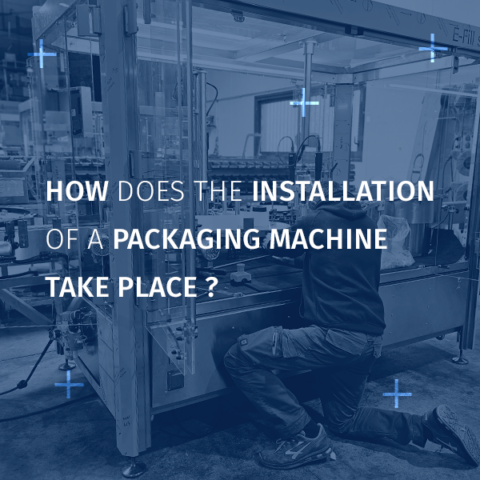
Step 5: Installing the packaging machine
Installation is carried out directly on-site by our technicians, who ensure the complete installation of the equipment to guarantee proper operation. The objective is to secure production ramp-up and minimize the risk of errors.
Operator training
Installing a packaging machine generally includes a training phase provided by our technical experts.
Operators learn how to:
- operate the machine;
- perform adjustments;
- change formats;
- carry out cleaning;
- perform first-level maintenance.
We provide personalized and detailed training courses to help companies quickly master their equipment.
Maintenance and support after installation
Installation does not mark the end of the project: proper technical support ensures long-term equipment performance.
The after-sales service notably handles:
- preventive and corrective maintenance operations;
- technical assistance.
Installing a packaging machine is a strategic step requiring technical expertise, preparation, and support.
From the initial needs analysis to production startup, every stage plays a role in the future performance of the line. A successful installation improves productivity, packaging quality, and operator handling.
Contact our experts today to assess together which packaging solution would best suit your business.
FAQ: Packaging Machine Installation
How long does the installation of a packaging machine take?
The duration depends on the complexity of the line. A simple machine can be installed within a few hours, while a complete line with a filling machine, capping machine, and labeling machine may require up to a week.
Is operator training necessary after installation?
Yes, training is essential to ensure optimal machine use, reduce errors, and perform first-level maintenance.
Can a new machine be integrated into an existing line?
Yes, it is possible to add a filling machine, capping machine, or labeling machine to an existing line (subject to a prior technical study). Our experts support you throughout this process.
Which industries use packaging machines?
Packaging machines are used in many industries: food processing, cosmetics, chemicals, viticulture, e-liquids, pharmaceuticals, and household products.
Why choose a monoblock packaging system?
A monoblock system combines several functions within one machine to save space, increase productivity, and simplify operations.