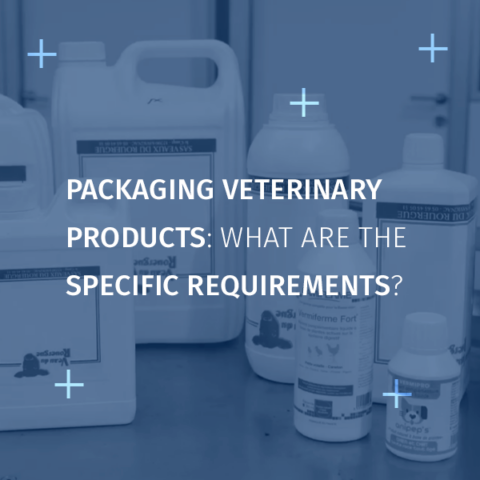
The animal health and pet care market includes a wide range of products: antiparasitic treatments, lotions, shampoos, dietary supplements, antiseptics, sprays, hygiene products, ear care solutions, dental care products, oils, elixirs, as well as reagents and technical preparations intended for animal healthcare.
Behind this diversity lies a common challenge: packaging products that can sometimes be sensitive while ensuring a high level of precision, traceability, and safety.
At CDA, we have been supporting manufacturers of animal health and pet care products with their packaging projects for many years. From filling to capping and labeling, each step must meet specific requirements. What are the main challenges encountered, and which solutions can we implement to address them?
Animal Health Product Packaging: A Sector Combining Healthcare, Hygiene, and Product Diversity
Animal health products do not represent a single homogeneous category. Within the same production facility, it is possible to package:
- low-viscosity liquids;
- viscous or paste-like products;
- sprays and sprayable products;
- liquid dietary supplements;
- small bottles, larger bottles, jerrycans, or technical containers equipped with pumps, sprayers, pipettes, or safety caps.
This product diversity creates an immediate challenge: having equipment capable of adapting to the product viscosity, container type, and closure system.
This is precisely why we develop filling machines, capping machines, labeling machines, and monoblock systems that can evolve alongside our customers’ needs.
First Challenge: Accurate, Consistent Filling for Different Formulations
Why is filling accuracy so important?
Animal health products are often sold in small volumes, ranging from a few milliliters to several hundred milliliters. Some contain active ingredients or specific formulations that require highly controlled dosing consistency.
Manufacturers must also minimize product waste, especially when packaging high-value products.
The challenge: one production area, multiple product behaviors
Animal health packaging may involve:
- a relatively viscous pet shampoo;
- a more fluid antiparasitic solution;
- a maintenance spray;
- a dental gel;
- a liquid dietary supplement.
However, a gel, lotion, and low-viscosity liquid cannot be filled using the same technology. The right solution must be selected according to the product viscosity, required throughput, and desired level of accuracy.
Which CDA solutions can be used?
To address this wide range of applications, we offer several filling solutions.
The K-One is particularly well suited for small production runs and frequent product changes, while automatic models such as the K-Net Auto and K-Line S can support higher production rates while maintaining excellent dosing accuracy.
A filling machine designed for animal health products should provide:
- consistent dosing;
- easy cleaning between production runs;
- the ability to move toward a higher level of automation.
Second Challenge: Capping as a Key Factor for Safety and Productivity
A wide variety of closure systems
Animal health product manufacturers use many different types of closures, including:
- standard screw caps;
- child-resistant or safety caps;
- pumps;
- sprayers;
- technical applicator caps;
- pipettes or other specific systems depending on the final application.
The capping machine plays a central role. It must ensure a reliable, consistent, and repeatable closure process without damaging the cap or container and without unnecessarily reducing production throughput.
Why is this step critical?
An incorrect capping operation can lead to:
- leaks;
- product deterioration;
- safety issues during use;
- customer complaints or non-compliant products.
To ensure reliable closure performance, we adapt each solution to the type of closure being used.
Our VS2000, VSA, and capping modules integrated into our monoblock systems can handle a wide range of caps, pumps, and sprayers, ensuring consistent and repeatable tightening.
Third Challenge: Perfect Labeling Despite a Wide Variety of Containers
Labels must meet multiple requirements
In the animal health sector, manufacturers work with containers in many different shapes and formats:
- cylindrical;
- conical;
- oval;
- rectangular;
- very small formats;
- containers requiring identification on multiple sides.
Regardless of the container shape, the label must be applied with precision, without bubbles or misalignment, while respecting the required positioning.
This is especially important when the product includes:
- a commercial front label;
- detailed instructions or extensive regulatory information;
- batch numbers, expiration dates, or other traceability information.
Regulatory requirements increase labeling expectations
In a sector related to animal health, clear and readable product information is essential. Manufacturers must be able to apply the following information accurately and consistently:
- product name;
- usage instructions;
- batch information;
- identification details required for traceability.
Why does choosing the right labeling machine make a difference?
A labeling machine adapted to the container format allows manufacturers to:
- ensure accurate label placement;
- maintain consistent production throughput;
- reduce product rejects;
- improve the final appearance of the product.
To meet these requirements, we offer several labeling solutions designed for different container formats.
The Ninon Mix, for example, can label cylindrical, conical, rectangular, and oval containers with high precision, even when multiple labels need to be applied.
Fourth Challenge: Managing Different Production Rates, Batch Sizes, and Format Changes
A new pet care brand, a laboratory, a contract manufacturer, or an established producer will not have the same production requirements.
That is why the key question is not only “Which machine should we choose?”, but also: what level of automation best matches our production needs and future growth?
For small production runs: flexibility comes first
A company launching a range of pet shampoos, oils, or animal care products may need to:
- produce small batches;
- manage multiple product references;
- frequently change container formats;
- limit initial investment.
In this case, a semi-automatic filling machine, combined if needed with a semi-automatic labeling machine or a suitable capping machine, can be an ideal solution.
For higher production volumes: automation to increase throughput
As production volumes increase, repeatability, process efficiency, and the reduction of manual handling become increasingly important.
Our solutions evolve alongside our customers’ needs.
A K-One can initially be combined with a capping machine and a labeling machine, before evolving toward a K-Net Auto, a K-Line S, or a monoblock system as production requirements increase.
Fifth Challenge: Combining Compact Design, Automation, and Versatility with Monoblock Systems
When production requirements increase, or when a manufacturer wants to optimize the sequence of filling, capping, and labeling operations, a packaging monoblock becomes a particularly valuable solution.
What is a monoblock system for animal health product packaging?
A monoblock system combines several key operations into a single machine:
- filling;
- capping;
- labeling.
At CDA, our monoblock systems are designed to integrate these operations into a compact piece of equipment, with configurations adapted to each project.
Our E-Fill and E-Fill SW monoblocks combine filling, capping, and labeling on a single system. They help reduce manual handling, save floor space, and ensure smooth continuity between each packaging step.
Why is a monoblock system particularly suitable for animal health products?
Because this sector often combines:
- a wide variety of container formats;
- the need to reduce manual handling;
- the need to secure and streamline the overall process.
A monoblock system allows manufacturers to:
- reduce equipment footprint;
- limit transfers between separate workstations;
- create a smoother transition from filling to capping and labeling;
- improve the overall consistency of the packaging line.
Sixth Challenge: Hygiene, Ease of Cleaning, and Efficient Product Changeovers
Packaging animal health products also requires careful consideration of hygiene and equipment cleaning requirements. It is essential to be able to:
- quickly clean product circuits and product-contact areas;
- prevent cross-contamination between different product references;
- reduce downtime during product changeovers;
- maintain consistent filling and capping quality from one product to another.
These requirements become even more important when manufacturers frequently switch between different product batches.
When designing our equipment, we pay particular attention to easy adjustments, simplified cleaning procedures, and fast format changeovers.
Our goal is to reduce downtime while maintaining consistent packaging quality throughout production.
Seventh Challenge: Ensuring Overall Packaging Line Consistency
The performance of a packaging line is not measured by speed alone. It also depends on the ability to connect each operation smoothly while maintaining consistent quality. At CDA, we approach packaging as a complete and coordinated process. A high-performance filling machine reaches its full potential when it works seamlessly with the capping machine, labeling machine, and peripheral equipment. This global approach allows us to design packaging lines that are adapted to the specific requirements of each project.
Packaging animal health products requires a balance of precision, flexibility, and reliability at every stage of production. Filling, capping, labeling, traceability, and format changes: every project comes with its own specific challenges.
That is why we develop solutions that can adapt to both small production runs and higher-volume operations.
From the K-One to the K-Line S, from the VS2000 to the Ninon Mix, as well as our E-Fill and E-Fill SW monoblock systems, we support our customers in designing reliable, scalable packaging lines that are perfectly suited to their needs.
Are you looking to package animal health or pet care products? Our teams are available to review your project and help you identify the most suitable solution.
FAQ : Animal Health Product Packaging
What are the main challenges when packaging animal health products?
The main challenges include the wide variety of formulations (liquid, viscous, paste-like, or foaming products), different container formats, the need for accurate filling, reliable capping, clear labeling, and compliance with traceability and hygiene requirements.
Which filling machine should be used for animal health products?
The choice of filling machine depends primarily on the product viscosity, filling volume, container type, and required production throughput.
For small, multi-product batches, a semi-automatic solution such as the K-One may be the right choice. Higher-volume production typically requires an automatic filling machine or a monoblock system such as the E-Fill.
Why use a capping machine for animal health bottles?
A capping machine ensures consistent and repeatable tightening, which is essential to prevent leaks, secure products during transportation, and guarantee reliable bottle closure.
Which labeling machine is suitable for conical, cylindrical, or oval animal health containers?
The labeling machine should be selected according to the container shape and the number of labels to be applied.
Animal health products often use containers with a wide variety of shapes. A versatile machine such as the Ninon Mix ensures accurate and consistent label positioning across different container formats.
When should you choose a packaging monoblock system?
A monoblock system such as the E-Fill is particularly suitable when filling, capping, and labeling operations need to be combined into a single machine.
It is an effective solution for saving floor space, streamlining the packaging process, and improving production throughput.
Does CDA offer solutions for packaging animal health and pet care products?
Yes. CDA provides filling machines, capping machines, labeling machines, and monoblock systems designed for packaging animal health and pet care products.